September 21, 2026
Dual-driven Enterprise for Power Equipment Manufacturing & Technical Services
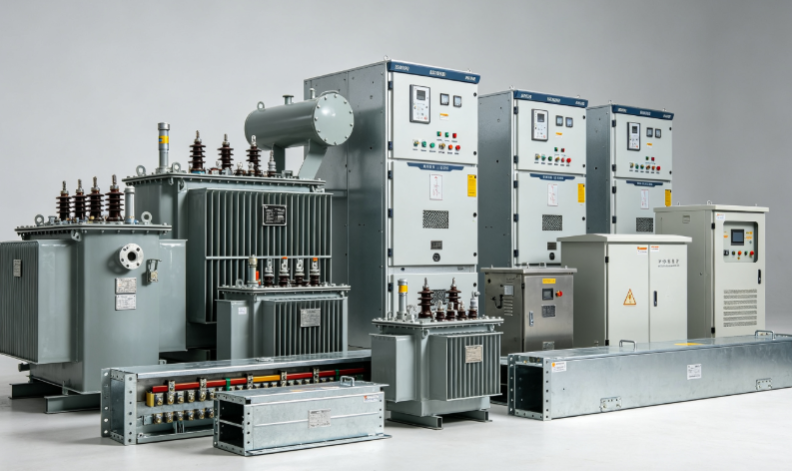
Table of Contents
1. Definition and Value of the Dual-driven Model
2. Core Power Equipment Manufacturing Business
3. Technical Services and Engineering Support
4. Synergy of the Dual-driven Model
5. Quality Assurance and Certification Systems
6. FAQ
1. Definition and Value of the Dual-driven Model
A dual-driven enterprise is an integrated company that possesses both product manufacturing and technical service capabilities. In the power equipment sector, this model means the enterprise not only provides power equipment products but also offers full lifecycle technical services from design consultation and installation commissioning to operation and maintenance.
The value of this model lies in: manufacturing capability ensures product quality and cost control, while technical service capability ensures correct application and long-term reliable operation. The combination enables the enterprise to provide customers with one-stop solutions from equipment selection to operation and maintenance, reducing customers' coordination costs among multiple suppliers.
2. Core Power Equipment Manufacturing Business
2.1 Transformers
l Oil-immersed Transformers: Distribution transformers, power transformers
l Dry-type Transformers: Epoxy resin cast, non-encapsulated
l Special Transformers: Rectifier transformers, furnace transformers
2.2 Switchgear
l High-voltage Switchgear: GIS, AIS
l Medium-voltage Switchgear: Armored type, fixed type
l Low-voltage Switchgear: Draw-out type, fixed type
2.3 Distribution Equipment
l Distribution boxes, distribution cabinets, cable branch boxes
l Busway, cable trays
2.4 Power Electronic Equipment
Variable frequency drives, reactive power compensation devices, active power filters
3. Technical Services and Engineering Support
l Design Consultation: Power system scheme design, equipment selection, and technical consultation
l Installation and Commissioning: On-site installation guidance and system commissioning
l Preventive Maintenance: Regular inspections and preventive maintenance
l Fault Diagnosis and Repair: Fault troubleshooting and emergency repair
l Equipment Upgrades and Retrofits: Upgrading aging equipment and intelligent retrofits
l Technical Training: Equipment operation and maintenance training
4. Synergy of the Dual-driven Model
4.1 Mutual Promotion of Products and Services
Manufacturing provides product knowledge and quality assurance for technical services; technical services provide market feedback and product improvement direction for manufacturing. The two form a virtuous cycle, jointly driving the enterprise's sustainable development.
4.2 Deepening Customer Relationships
Transforming from one-time equipment sales relationships to long-term service relationships covering the entire equipment lifecycle. Customer stickiness and customer lifetime value are significantly improved.
4.3 Competitiveness Enhancement
In markets with high equipment homogeneity, technical service capability becomes a differentiated competitive advantage.
5. Quality Assurance and Certification Systems
l ISO 9001: Quality management system
l ISO 14001: Environmental management system
l ISO 45001: Occupational health and safety management system
l Product Certifications: CCC, CE, UL, etc.
l Power Construction Qualifications: Power installation, repair, and testing permits
6. FAQ
Q: What is the difference between a dual-driven enterprise and an ordinary equipment manufacturer?
A: Ordinary equipment manufacturers focus on product sales as their core business, with technical support typically limited to after-sales warranty. Dual-driven enterprises elevate technical services to the same strategic importance as manufacturing, providing comprehensive services covering the entire equipment lifecycle.
Q: How is technical service capability reflected during the equipment selection phase?
A: Enterprises with technical service capability can provide professional system scheme design, load calculation, and equipment configuration recommendations during the equipment selection phase, ensuring equipment selection matches actual requirements.
Q: What does preventive maintenance service include?
A: Preventive maintenance services include regular inspections, infrared thermography, insulation resistance testing, relay protection calibration, equipment cleaning, and fastener inspection.
Q: Is the dual-driven model applicable to all power equipment?
A: The dual-driven model is particularly applicable to medium and high-voltage power equipment and complex systems. For standardized low-voltage equipment with simple installation, the added value is relatively lower.
Q: What are the qualification requirements for the technical service team?
A: The technical service team must possess relevant power engineering qualifications, including high-voltage electrician certification, relay protection commissioning certification, and power construction permits.