
October 15, 2026
Polymer Housed Surge Arrester: Specs, Benefits and Applications
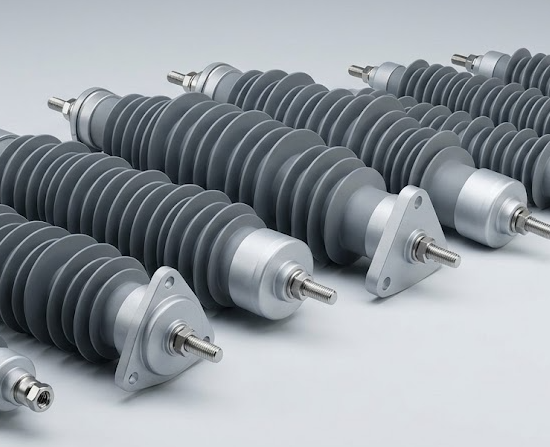
Table of Contents
1. Introduction
2. Core Structure and Working Principle
3. Polymer vs Porcelain Surge Arrester Performance Data
4. Standard Technical Parameters
5. Key Functional Advantages
6. Power System Application Scenarios
7. Field Operation & Maintenance Tips
8. Industry FAQ
Introduction
Power transmission and distribution systems face frequent lightning strikes and switching surges. These transient overvoltages damage transformers, cables and electrical equipment easily.
Polymer housed surge arrester is a mainstream overvoltage protection device in modern power grids. It use metal oxide resistor core and flexible polymer outer shell.
This polymeric surge arrester replace traditional porcelain arrester gradually. It fix the fragility and heavy weight problems of ceramic housing products.
It provide stable lightning protection and overvoltage suppression. It keep power system operation safe and continuous.
Core Structure and Working Principle
Internal and External Composition
The main core of polymer housed surge arrester is zinc oxide resistor discs. These components own excellent nonlinear voltage characteristics.
The outer layer adopt silicone rubber or EPDM polymer housing. The integrated wrapping structure seal internal parts completely.
Metal terminals and insulating support parts ensure stable electrical connection in field installation.
Basic Working Mechanism
Under normal system voltage, the arrester keep high resistance status. Almost no current pass through the device.
When surge overvoltage occurs, resistor resistance drop sharply. It guide surge current into the ground quickly.
After voltage recover to normal level, the arrester return to high resistance state. It no affect regular power supply.
Polymer vs Porcelain Surge Arrester Performance Data
Housing material decide field adaptability and service life of surge arresters. The table below list verified industry standard test data for two mainstream arrester types.
Performance Parameter | Polymer Housed Surge Arrester | Porcelain Housed Surge Arrester |
Product Weight | 30–50% lighter | Heavy, rigid structure |
Anti-explosion Performance | Non-shattering, safe failure | Easy to burst under fault current |
Pollution Resistance Grade | High (anti-tracking polymer shell) | Medium, easy surface contamination |
Effective Leakage Distance | Longer customized distance | Fixed limited distance |
Average Service Life | 15–25 years | 10–15 years |
Installation Adaptability | Strong, fit complex environments | Poor, strict site requirements |
Polymer housed surge arrester show obvious advantages in safety and durability. It avoid broken porcelain splatter damage during equipment failure.
Light weight reduce installation difficulty. It cut construction cost for overhead line and substation projects.
Standard Technical Parameters
Common polymer housed surge arrester voltage grade cover 3kV to 550kV. It match distribution and high-voltage transmission grids.
Nominal discharge current reach 10kA or 20kA for mainstream models. It meet standard lightning surge protection needs.
Max residual voltage keep at low level. It provide reliable voltage limiting protection for backend equipment.
Qualified products pass strict temperature cycle and humidity aging tests. It adapt outdoor long-term operation.
Key Functional Advantages
Polymer housing have good elasticity and toughness. It resist collision and mechanical vibration in outdoor sites.
Special anti-pollution shell material resist dust, salt fog and acid rain erosion. It suit coastal and industrial heavy pollution areas.
Integrated sealing design prevent internal moisture and dust entering. It keep stable electrical performance all year round.
Non-explosion structure improve power grid operation safety. It no produce sharp fragments when overload failure happen.
Power System Application Scenarios
Distribution line pole installation use polymer housed surge arrester for overhead lightning protection.
Indoor and outdoor substations adopt polymer arresters to protect switchgear and transformers.
Renewable energy power stations, including wind and solar farms, use these devices for transient overvoltage suppression.
Industrial power plant auxiliary systems rely on polymer surge arresters to stabilize power quality.
Field Operation & Maintenance Tips
Check polymer shell surface regularly. Clean accumulated dust and dirt to maintain insulation performance.
Monitor operational leakage current data. Abnormal current indicate internal component aging.
Avoid long-term strong mechanical extrusion. It will deform polymer housing and damage sealing structure.
Replace aging arrester timely when shell cracking or performance degradation occurs.
Industry FAQ
1. What is a polymer housed surge arrester?
It is a metal oxide surge protection device with polymer insulating shell. It suppress lightning surge and switching overvoltage to protect power system equipment.
2. Why polymer arrester better than porcelain type?
Polymer housed surge arrester is lighter, non-explosive and pollution resistant. It have longer service life and higher field operation safety.
3. What voltage levels do polymer surge arresters support?
Standard models cover 3kV low voltage to 550kV high voltage. It fit full-range power transmission and distribution system protection.
4. What environment suit polymer housed surge arresters?
It work well in coastal salt fog, industrial pollution, high humidity and frequent lightning areas. It have stronger environmental adaptability than traditional products.